Temporary Closures: Current advice


Draft Heritage Management Plan - Old Parliament House Gardens
Image
Consultation type
Draft Heritage Management Plans
Closing date
27 May 2026
Public consultation has now closed.
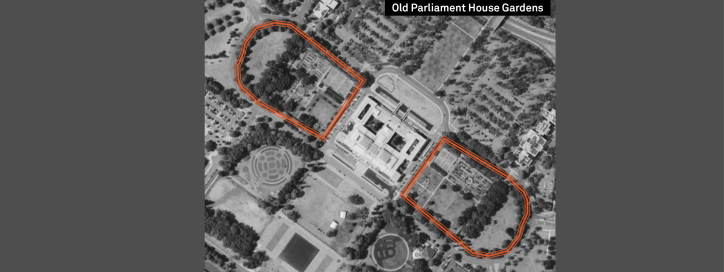
The Old Parliament House (OPH) Gardens comprises of Senate Gardens located on the western side of the site, positioned adjacent to the Senate wing of Old Parliament House and the House of Representatives Gardens occupy the eastern side of Old Parliament House, named for their proximity to the House of Representatives wing.
The OPH Gardens are the Commonwealth Government's first Parliamentary gardens and are significant as an integral component of the Old Parliament House complex that occupies a prominent and strategic location at the southern end of the main Land Axis of Griffin's city design.
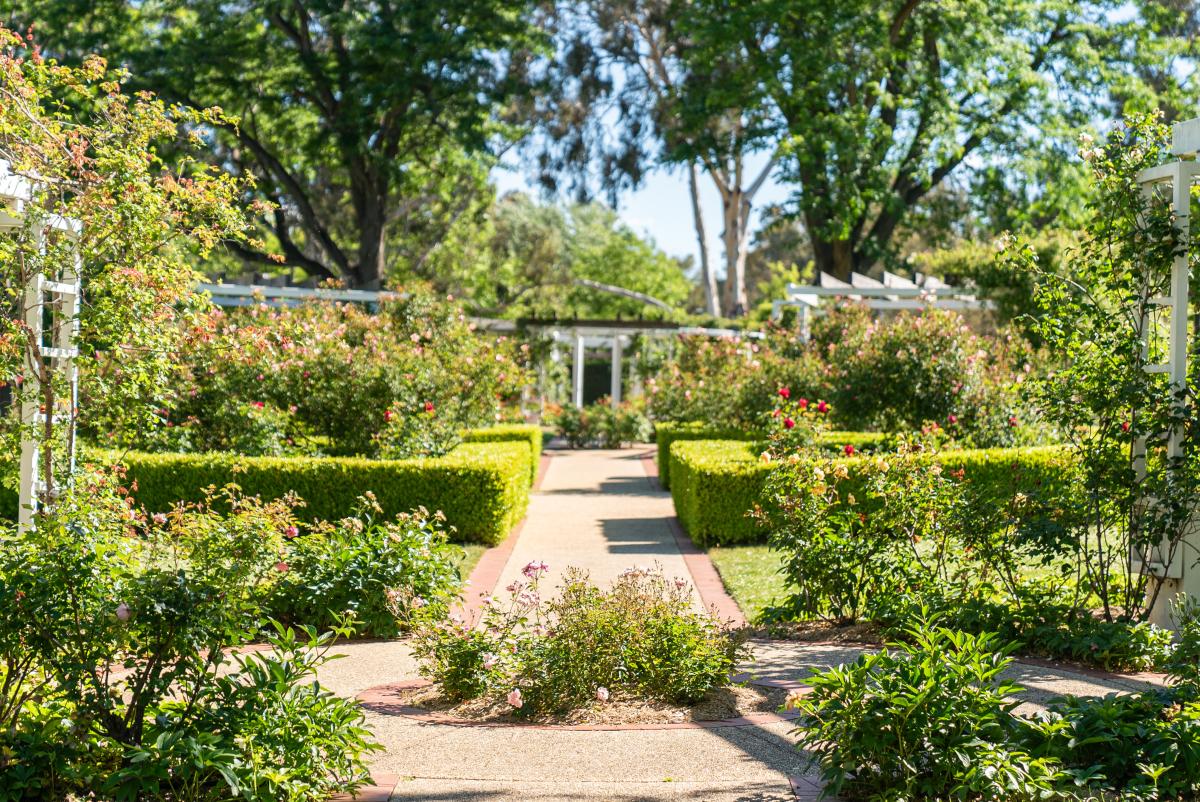
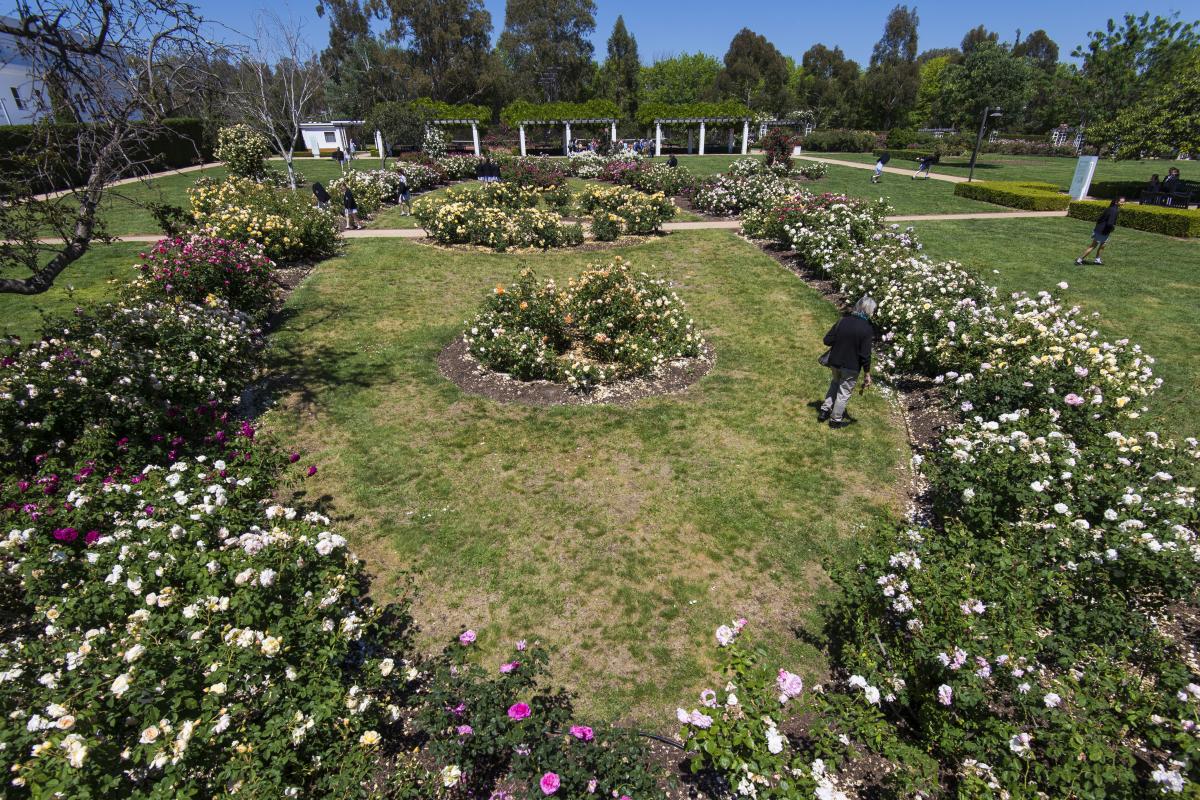
The OPH Gardens, set within Canberra’s Parliamentary House Vista, is part of a nationally significant landscape designed for governance, ceremony and public engagement. Flanking the heritage-listed Old Parliament House, the gardens provide a green, accessible space that complements the building’s formal Inter-War Stripped Classical architecture and its alignment along the Parliamentary House Vista.
The OPH Gardens was included in the CHL in 2004.
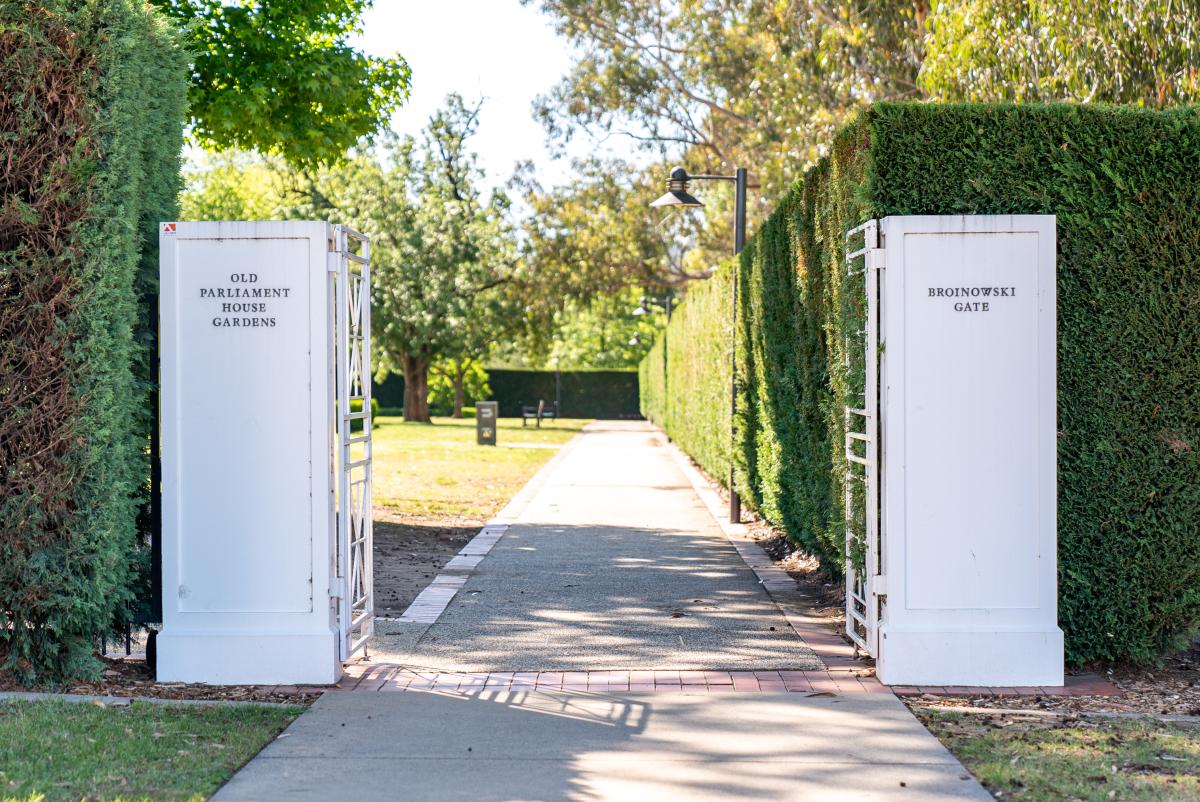
Under section 341S(6)(b) of the Environment Protection and Biodiversity Conservation Act 1999, the National Capital Authority (NCA) welcomes comments on the draft Heritage Management Plan from members of the public, Indigenous People with rights and interests to the place, key stakeholders and community groups by 5.00pm, Wednesday 27 May 2026.
The draft Heritage Management Plan can be downloaded below or can be viewed in hardcopy at the Reception desk at the NCA, Treasury Building, King Edward Terrace, Parkes ACT.
Submissions are to be made via email to heritage@nca.gov.au.
The NCA may be contacted for further information on 6271 2888 or via email to heritage@nca.gov.au.
Attachments
A Heritage Management Plan (HMP) is a tool used by owners and managers of heritage places to conserve and protect the heritage values of places. It is a written document identifying the detail of heritage values of a place and explaining how the heritage values are to be protected, used and managed into the future.
A HMP considers the opportunities and constraints at a place, identifies potential changes to a place, guides day to day management and outlines conservation policies to ensure the ongoing conservation of the heritage values of a place.
In accordance with s341X of the Environment Protection and Biodiversity Conservation Act 1999 (the Act) (EPBC Act), public consultation is undertaken to determine:
- whether the plan is consistent with the Commonwealth Heritage management principles; and
- the effectiveness of the plan in protecting and conserving the Commonwealth Heritage values of the place.
s341X of the EPBC Act requires an agency to review a HMP for any heritage place it owns or controls at least every 5 years.
Yes, in the past HMPs have been prepared by a number of a different consultants and whilst information within the documents is generally the same, each consultant presents the document with a different appearance and format. The NCA has implemented a HMP template to provide consistent branded format for HMPs utilising a more efficient structure.
Further, the content of each HMP has been updated. The ‘description’ and ‘condition’ of each place and condition and integrity of heritage values, has been updated to reflect changes that may have occurred at each place since the preparation of the old plan. Constraints and opportunities relating to each place including function and use, interpretation and promotion and development have also been updated to reflect any changes to statutory requirements and to confirm existing management regimes.
Existing conservation policies have been reviewed and updated to delete redundant polices and provide consolidated policies, actions and implementation (timing and priorities) within a tabulated format for ease of use.
No. The absence of a current plan for a place does not impact the heritage status of a place.