Temporary Closures: Current advice

Reconciliation Place Self-Guided Walking Tour
Image
Distance
1.10 km
Duration
60 minutes
Difficulty
Easy
Tour type
Walking Tour
Reconciliation Place: A Journey of Understanding
Discover a Shared History
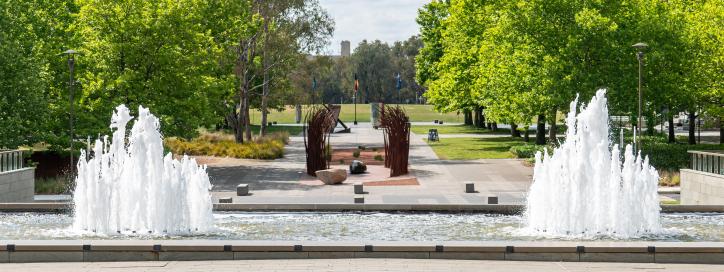
Embark on a journey of reconciliation and understanding at Reconciliation Place. As you make your way through, you’ll encounter 17 powerful artworks that tell stories of First Nations peoples, cultures, histories, and aspirations. Located on the traditional lands of the Ngunnawal people, Reconciliation Place invites you to reflect on Australia’s past and future. Ngunnawal Elders remind us to tread carefully on Country, encouraging us to respect and care for the land.
Explore Reconciliation Place: Your Way
Discover captivating artworks and celebrate Australia’s shared cultural heritage. Travel along the pathways, pausing to reflect on themes of Indigenous achievements, uniting, belonging and connection to the land and waters. Reconciliation Place has become a journey toward compassion and forgiveness for all Australians.
Fun Facts
- Did you know that the cultivation of yam daisy crops were widespread across South-Eastern Australia?
- How about that the word Canberra comes from the Ngunnawal language and is believed to mean meeting place?
- Or, that Ngunnawal people once gathered here to feast on Bogong moths, a nutritious and sustainable food source?
- Were you aware? The 1967 referendum saw the highest ‘Yes’ vote ever recorded for a Federal Referendum with 90.77% voting for change.
Explore the Artworks
As you wander through Reconciliation Place, you’ll be captivated by stunning artworks created by talented First Nations artists. These artworks celebrate the richness of First Nations culture, stories, and achievements. They also embody sustainable practices and enduring wisdom of the oldest continuing culture in the world.
1. Fire and Water by Judy Watson
Discover the ancient practice of feasting on Bogong moths at the Hearthstone, a central element of this artwork. This ceremonial site, inspired by the Yuriarra Moth Stone, symbolises the gathering of communities to share food, stories, and strengthen bonds.
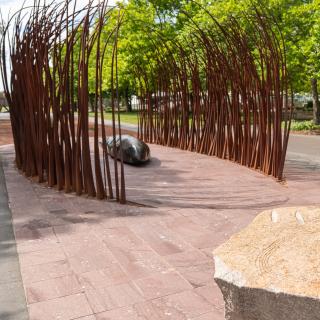
2. Methalu Tharri (Smooth Sailing) by Vic McGrath
Inspired by Torres Strait Islander canoes, this artwork depicts a celestial calendar, featuring the Southern Cross and the mythical hero Tagai. It highlights our shared human experience of the night sky and the different stories we tell about it.
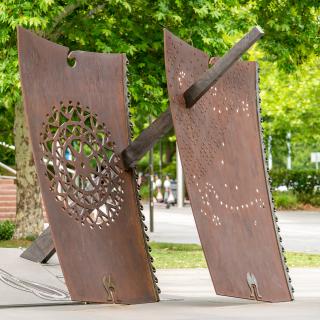
Separation
This powerful artwork commemorates the Stolen Generations, a dark chapter in Australian history. It explores the devastating impact of forced removal on Indigenous children, families, and communities.
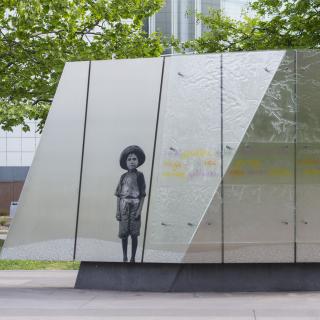
3. Separation 1
A lone boy and an empty coolamon (used to carry babies) contrast with words for ‘children’ in various Indigenous languages.
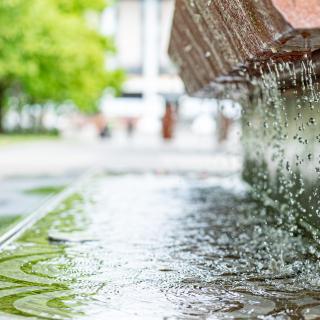
4. Separation 2
The gentle flow of water symbolises the tears shed, while the rusted finish represents the red earth of central Australia. Words from the Stolen Generations are etched onto the map of Australia, acknowledging their experiences.
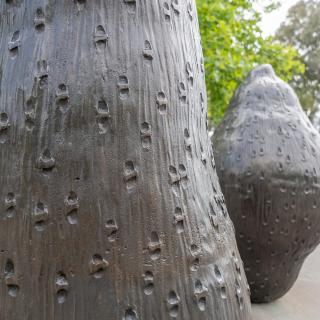
5. Kwi’ith, Man and Woman Yam by Dr. Gloria Fletcher (Thancoupie)
These monumental bronze yams symbolise the duality of gender in First Nations culture. The artist’s own finger markings invite visitors to touch and connect with the artwork, reflecting the inclusive nature of reconciliation.
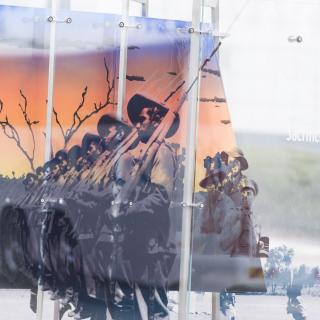
6. Strength, Service, and Sacrifice
This artwork honours Indigenous Australians who have served their country and have also made significant contributions to sport.
It celebrates the unity and resilience of the Australian people.
7. Ngunnawal
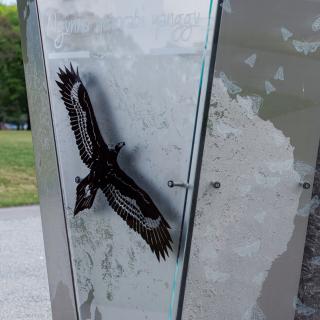
“Ngunna yerrabi yanggu - You’re welcome to leave your footprints on our land.” This traditional Ngunnawal welcome invites visitors to tread carefully on Country, leaving a gentle impact on the landscape. The Wedge-tailed Eagle is a symbol of the high country. It also represents the migratory patterns of the Bogong Moth.
8. Leadership
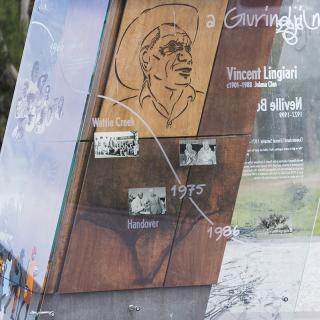
Social change is driven by strong leadership and collective action. This artwork celebrates the contributions of Indigenous leaders like Senator Neville Bonner, the first Indigenous man elected to Australian Parliament, and Vincent Lingiari, who led the Wave Hill
walk-off, a pivotal moment in the Aboriginal Land Rights Movement.
9. Referendum
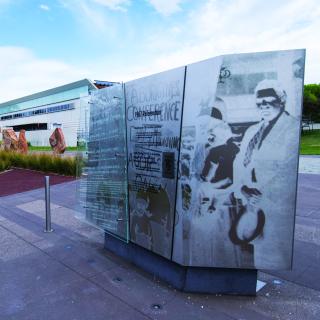
To date, 45 referenda have been held since Federation but only eight have been successful. The 1967 Referendum, which proposed to include Aboriginal people in the census and allow the Commonwealth Government to make laws for Aboriginal people, received the highest positive response of all of these.
10. Women
This artwork celebrates the perseverance and courage of three remarkable women: Faith Bandler, Evelyn Scott, and Lady Jessie Street. These women, all from diverse backgrounds, played pivotal roles in the 1967 Referendum and their stories continue to inspire the reconciliation process. The evocative words between the artworks highlight the qualities and values that united them.
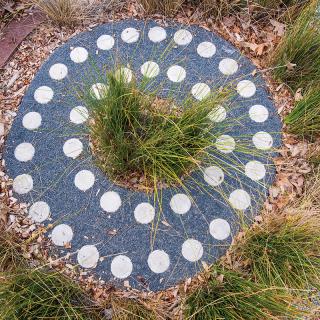
11. Wati Jarra Jukurrpa (Two Men Dreaming)
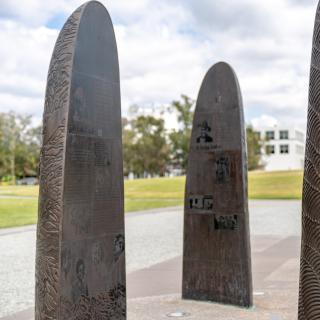
Inspired by Paddy Japaljarri Stewart’s Warlpiri painting, this artwork depicts a ceremonial landscape. The bands represent Witi, ceremonial poles used in initiation rites, while the circular forms symbolise gatherings and celestial bodies.
12. Land Rights
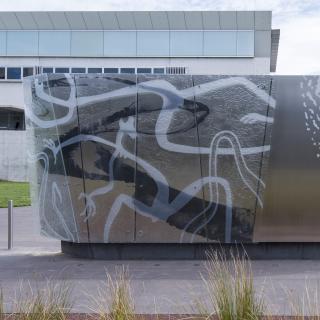
This artwork explores the legal battles for Indigenous land rights, featuring extracts from significant cases and a map of Meriam Mer (Murray Island). The thumbprint and Latin phrases “Terra Nullius” and “Terra Aboriginum” symbolise the contested notions of land ownership. The artwork also celebrates the diverse landscapes and elements of Country: water, earth, and life.
The Stone Artworks
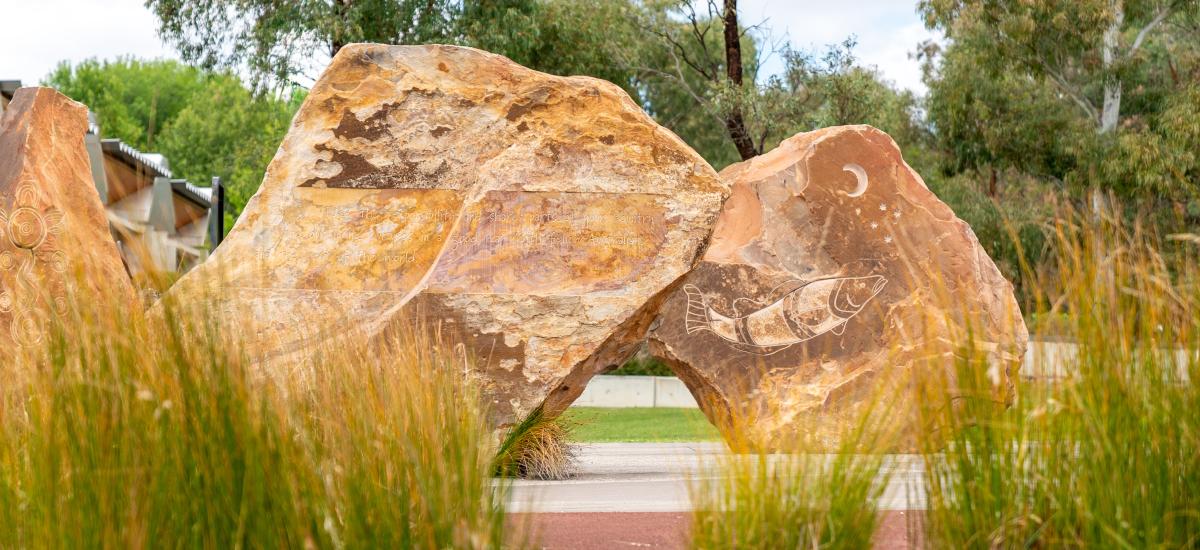
These stones celebrate the resilience and achievements of significant Indigenous Australians who have dedicated their lives to Reconciliation. Each artwork features evocative carvings and inspiring quotes, challenging us to contribute to a more just and equitable future.
13. Ruby Florence Hammond
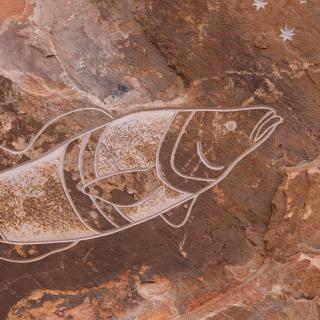
The Murray cod holds significant cultural meaning for the Ngarrindjeri people. Ruby Florence Hammond was known for singing about the sun, moon, and stars, connecting people to each other and the land.
14. Robert Lee
The rainbow serpent, Bolung, is a powerful creator and destroyer in Aboriginal mythology. This artwork reflects Robert Lee’s deep spiritual connection to the land and the importance of sustainable living.
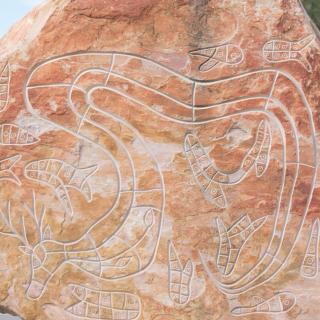
15. Wenten Rubuntja
This playful artwork depicts a humorous tale of courtship and rejection, featuring caterpillar women, honey ant women, and various animal suitors.
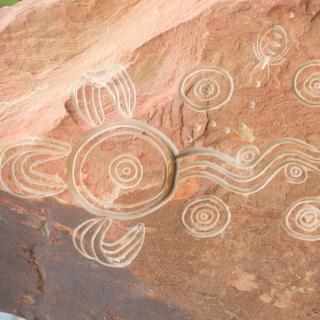
16. Bill Neidjie
The spirit warrior figure, Mabuyu, is a powerful symbol inspired by ancient rock art (Ubirr) at Kakadu National Park. This artwork honours Bill Neidjie, a respected elder of the Bunitj Clan and a guardian of cultural heritage.
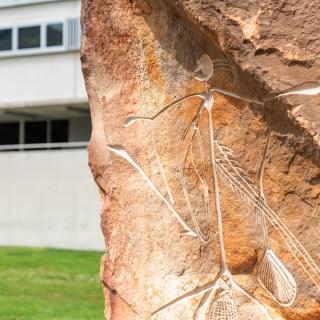
17. Gatjil Djerrkura
The Wälatha, a fighting stick, was a tool used by Wangurri clan leaders to maintain order and peace. This artwork reflects the importance of leadership and diplomacy in Indigenous cultures.
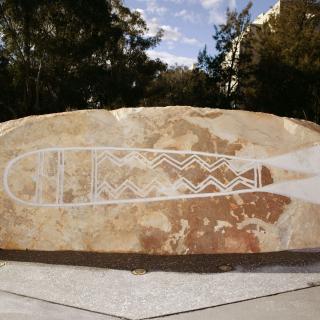
A Shared Future
By exploring Reconciliation Place, you can foster greater understanding of Indigenous cultures and histories, contributing to a more informed and inclusive society. Share your experience on social media using #ReconciliationPlace and inspire others to visit.
Getting There
- By Bike: Utilise the bike racks at Questacon, the National Library of Australia, or Commonwealth Place.
- By Car: Find convenient parking at Questacon, the National Library of Australia, or the National Portrait Gallery. Accessible parking is available.
- By Public Transport: Several bus routes pass by Reconciliation Place. Check the Transport Canberra website for detailed route information.
Explore Further
Embark on a journey through Canberra’s rich history and stunning landscapes. Choose from a variety of self-guided walking or driving tours.
Retrace the steps of Anzac heroes or uncover the stories whispered by the Old Parliament House Gardens. Take the
Diplomatic Missions Driving Tour and discover Canberra’s rich international significance.
Prefer a guided experience? Simply call the National Capital Exhibition at (02) 6272 2902 or visit nca.gov.au to book your spot. Follow us on social media @nationaltriangle for updates and inspiration.