Temporary Closures: Current advice


1913 - 1920: Walter Burley Griffin, Federal Capital Director of Design and Construction
Image
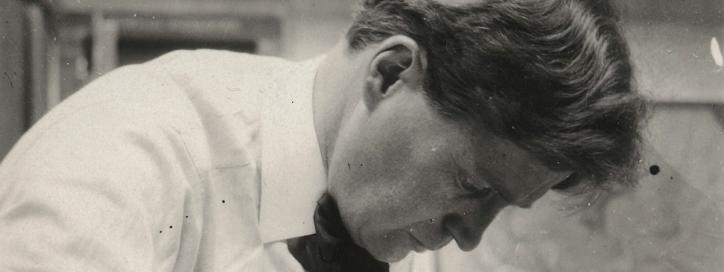
Portrait of Walter Burley Griffin, working on drawing, Eric Milton Nicholls Collection, between 1900 and 1935. National Library of Australia, nla.obj-150280651
Role: Responsible for overseeing the design and development of Canberra based on his design (the winning entry in the Federal Capital design competition) for the plan of Canberra.
After winning the international design competition for Canberra in 1912, Walter Burley Griffin was appointed the Federal Capital Director of Design and Construction on 18 October 1913. He commenced work in Melbourne with his wife, architect and professional collaborator, Marion Mahony Griffin, in May 1914.
During his appointment Griffin worked to develop and refine his plan for Canberra and to guide its implementation. However, almost immediately he faced difficulties. Senior bureaucrats in the Department of Home Affairs and the Department of Works regarded the appointment of Griffin - an outsider and an American - as a slight on their ability and responsibilities. They set out to undermine Griffin's position, determined his 3 year contract would not be renewed.
In 1916, a Royal Commission of Inquiry examined the administration and planning of Canberra. They found in Griffin's favour, declaring necessary information and assistance had been withheld from him and his powers usurped by certain officials. Although his contract was renewed, Australia's involvement in the First World War from 1914 meant money and resources to develop the Capital were in short supply.
Before his contract was terminated in 1920, Griffin revised elements of his plan, oversaw earthworks associated with the main avenues of his design and contributed to early landscape works, including the planting of trees beyond the city limits.
Legacy
Walter Burley Griffin's plan established the framework for Canberra's development. Many key aspects of his design, including the city's relationship to the surrounding landscape, its geometric structure and its principal avenues, continue to influence the national capital today.
Continue our story.
Up next: 1921 - 1924 Federal Capital Advisory Committee | National Capital Authority